Zebra
mussel infestation prevented at Fish
Hatchery - Vermont, USA
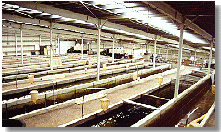 The
Ed Weed Fish Culture Station is the newest of five stations
operated by the Vermont Fish and Wildlife Department for the
purpose of providing fish to public waters throughout the
United States.
This
fish culture station is designed to take advantage of the
different water temperatures in Lake Champlain through the
use of a pair of intake lines. The water is drawn both
from shallow and deep levels, and is blended to provide the
correct temperature for the rearing of salmon and trout. The
station can process nearly 4,200 m³/h, 11 million gallons
of lake water daily, which is processed by filtration, disinfection
and oxygenation, after which it is delivered to the fish in
the different rearing units.
The
station receives water from a lake where Zebra Mussels invasion
was identified in the shallow water intake. Penetrating and
settling of Zebra Mussels in the water system would destroy
the hatchery from functioning. Therefore, the hatchery was
forced to use a deep water intake only, a process which required
heavy investments in energy for heating.
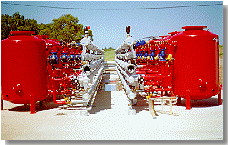 Amiad's
solution included the installation of nine 10 inch "EBS" filters
with a filtration degree of 25 microns, installed at flexible
locations, so as to enable the filtering of water from two
different sources. The maximum flow rate is 2,000 m³/h,
while the normal flow rate is 1,700 m³/h with a working
pressure of 1.4 bar. 3 inch pneumatic butterfly flushing valves
were installed with two flushing auxiliary pumps, in order
to accomplish flushing at low pressure conditions.
This
fully automatic filtering system requires low maintenance,
and has been working to the complete satisfaction of the users
since its installation. Now, for the first time in three years,
they are able to use the shallow water intake safely, thus
both saving energy and reducing downtime costs.



