Operating Principles
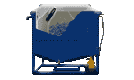
The operation of the coalescence type separator is based on the use of relatively close tolerance surface areas which reduce the distance an oil droplet must travel before it reaches a collection surface. The coalescence media are constructed of materials which are hydrophobic (water repelling) and oleophilic (oil attracting). When the oil droplet comes in contact with the media it reaches a zone of zero velocity and adheres to the surface. The coalescence surfaces multiply the effectiveness of the natural tendency of oil and water to separate.

As the media becomes coated with continuously agglomerating oil, the oil begins to form droplets. These droplets then coalesce or migrate upward. The oil coating the media surface accumulates at the top edge of the media where it detaches as a droplet and floats to the surface of the separation chamber. There are now two zones of liquid in the separator – oil and water.
The oil which has separated flows into the adjustable oil skimmer for removal. The clear water underflows the oil and is discharged from the system on a continuous basis.
Simultaneously with the oil/water separation, solids settle out through the spacing of the media pack matrix. They are collected in a hopper-bottomed sludge chamber below the media pack. The settled solids are stored here for disposal.