|
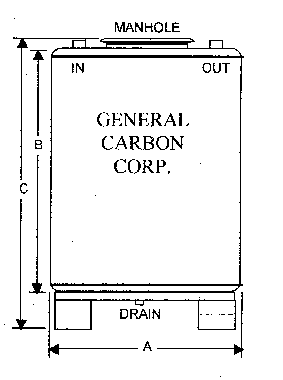 Transportable
Liquid Phase Adsorbers:
The Transportable
Liquid Phase Adsorbers are fabricated from mild steel and are tested to
DOT shipping standards.
All Transportable Liquid Phase Adsorbers have two part Epoxy coatings
on the inside and industrial enamel on the outside to give along service
life. 2" steel FPT inlet / outlet fittings on the top of the vessels are
connected to PVC internals for corrosion resistance.
The Transportable Liquid Phase Adsorbers have 4-way forklift access, a
screened drain and 16 inch top manhole, GC 8x3O Virgin, bituminous coal
base carbon is standard with GC 12x40, reactivated GC 8x3OR and other
specialty carbons available.
Specifications
| |
TL 1000
|
TL
1800
|
TL3000
|
| A Diameter, Outside
|
46"
|
46"
|
60"
|
| B Tank Height |
48"
|
72"
|
72"
|
| C Overall Height |
62"
|
86"
|
86"
|
| Carbon Weight, Lbs |
1000
|
1800
|
3000
|
| Max. Flow Rate, GPM
|
50
|
50
|
90
|
| Max. Design Temp., Deg
F |
140
|
140
|
140
|
| Maximum Pressure, psig
|
12
|
12
|
12
|
Installation
& Start Up
If possible, before the units are used for the first time, they should
be filled with clean water through the bottom collector, and allowed
to deeds for a period of 8 to 12 hours. A gentle backwash is recommended
to remove carbon fines that can cause excessive pressure drop through
the unit. Multiple units are usually connected in series with testing
between the units advised to determine when the first unit needs to
be changed out.
Maintenance
When in use, the only maintainance the Transportable Liquid Phase Adsorbers
Units require is testing for contaminants in the influent and effluent
streams, and checking the operating pressure of the system. Monitoring
the contaminant concentration level into the last unit in a series arrangement
is the recommended safeguard against having breakthrough in the final
outflow. When the concentration of contaminants in the flow coming out
of the lead unit equals the concentration of the flow into the unit,
the unit has reached its removal capacity and should be removed from
service. The working life of each adsorbed is dependent upon the type
of contaminant in the water as well as its concentration and the liquid
flow rate. A pressure relief device is advised to prevent damage to
the adsorbed or cause a failure in the event of excessive pressure buildup.
Backwashing an absorber that is operating at an elevated pressure will
sometimes provide a temporary lowering of the pressure drop through
a unit.
Recharging
Once the carbon is saturated by contaminants, the unit should be taken
off line. If connected in a series mode, the next down stream unit should
be moved into the lead position and a fresh unit put at the end of the
train. To purchase replacement carbon or to arrange for a carbon change
out, please contact our office. When preparing the unit for servicing,
as much water as possible should be drained from the vessel through
the screened drain fitting. Al shipping plugs must be replaced when
the unit is to be transported.
Disposal
Dispose of the spent carbon in accordance with Federal, State and Local
regulations.
WARNING!
Wet activated carbon readily absorbs free oxygen. ANY entry into carbon
vessels requires procedures for confined space entry and oxygen depletion
be followed!

|


